


outdoor-time-myopia-management
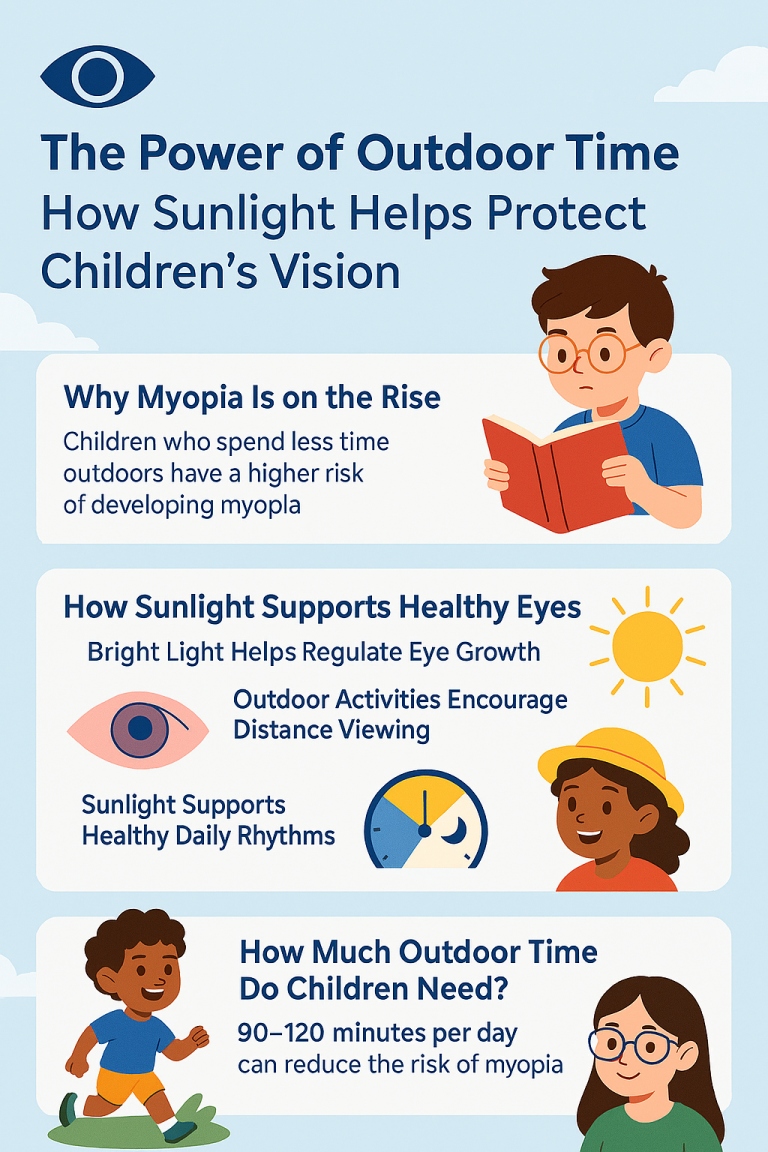
The Power of Outdoor Time: How Sunlight Helps Protect Children’s Vision
Myopia—often called short‑sightedness—is becoming increasingly common in children around the world. With more time spent on screens, studying indoors, and less time playing outside, it’s no surprise that parents are asking what they can do to help protect their child’s eyesight. One of the simplest and most effective strategies is also one of the most enjoyable: spending more time outdoors.
In this article, we’ll explore why outdoor time matters, how sunlight supports healthy eye development, and what families can do to build healthy habits.
Why Myopia Is on the Rise
Myopia occurs when the eye grows too long, causing distant objects to appear blurry. Genetics play a role, but lifestyle factors are now known to be major contributors. Children today spend more time indoors than any previous generation, and this shift has real consequences for eye growth.
Research consistently shows that children who spend less time outdoors have a higher risk of developing myopia. The good news is that increasing outdoor time can help slow or even prevent its onset.
How Sunlight Supports Healthy Eyes
It’s not about staring at the sun—far from it. Instead, it’s the overall brightness of natural outdoor light that seems to protect the eye.
1. Bright Light Helps Regulate Eye Growth
Outdoor light levels are dramatically higher than indoor lighting. This brightness stimulates the release of dopamine in the retina, a chemical that helps regulate normal eye growth. When dopamine levels are low, the eye may elongate too quickly, increasing the risk of myopia.
2. Outdoor Activities Encourage Distance Viewing
When children play outside, they naturally look far into the distance—something that rarely happens indoors. This reduces the strain associated with prolonged near work like reading or screen use.
3. Sunlight Helps Maintain a Healthy Daily Rhythm
Exposure to natural light supports the body’s circadian rhythm, which plays a role in overall health, including eye development.
How Much Outdoor Time Do Children Need?
Most studies suggest that 90–120 minutes of outdoor time per day can significantly reduce the risk of developing myopia. This doesn’t need to be all at once—short bursts throughout the day add up.
Some easy ways to reach this goal:
- Walking or riding a bike to school
- Eating lunch outdoors
- After‑school playtime in the backyard or park
- Weekend family activities like hiking, sports, or beach visits
Even on cloudy days, outdoor light levels are still far higher than indoors.
Outdoor Time Helps Even If Your Child Already Has Myopia
Outdoor time isn’t just preventive—it’s also beneficial for children already undergoing myopia management. While it doesn’t replace treatments like orthokeratology, atropine drops, or myopia‑control lenses, it complements them by supporting healthier eye growth.
Balancing Sun Safety and Eye Health
Parents often worry about UV exposure, and rightly so. The key is smart sun protection, not avoiding the outdoors altogether.
Tips for safe outdoor time:
- Wear a hat
- Use sunscreen on skin
- Choose UV‑protective sunglasses
- Seek shade during peak UV hours
Your optometrist can recommend sunglasses that protect the eyes without reducing the benefits of outdoor brightness.
Building Healthy Habits Starts Early
The earlier children develop outdoor routines, the better. Preschool and early primary school years are especially important for preventing early‑onset myopia, which tends to progress more quickly.
Encouraging outdoor play is one of the simplest, most natural ways to support your child’s long‑term vision.
Final Thoughts
Outdoor time is a powerful, accessible tool in the fight against childhood myopia. It’s free, fun, and supports not only eye health but physical and emotional wellbeing too. If you’re concerned about your child’s vision or want personalised advice on myopia management, your optometrist is here to help.